
Back To All Articles
December 15, 2025
Beyond static screens: Using Lottie files inside Figma
When interfaces rely on feedback, transitions, and subtle guidance, still frames often fall short. That’s where Lottie files inside Figma change the game. Instead of describing motion or leaving it to interpretation, designers can place real animations directly into their layouts and show exactly how an interface behaves.
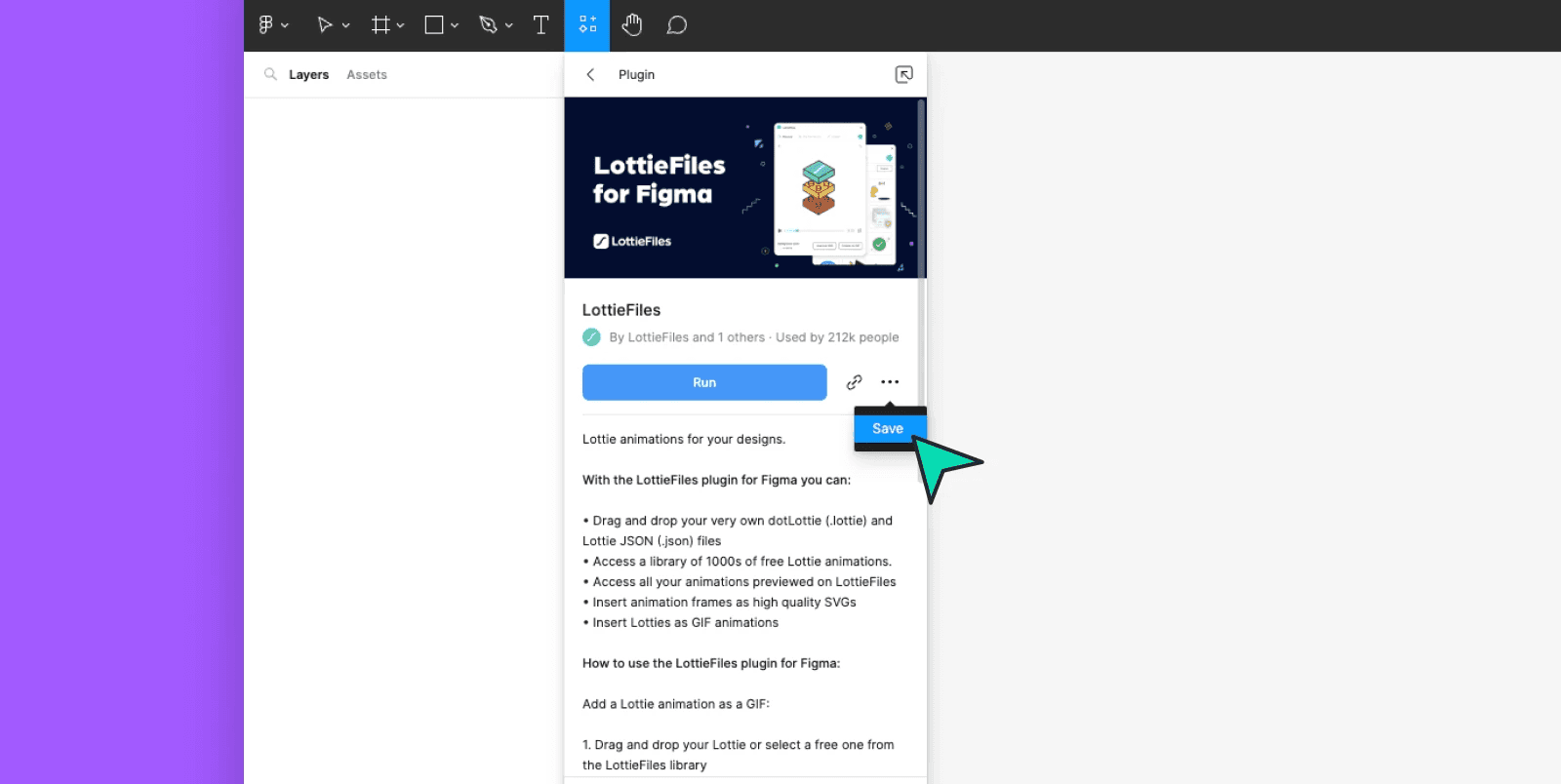
In day-to-day product work, this makes design decisions clearer and faster. Loading states no longer feel like placeholders, onboarding screens gain rhythm, and microinteractions communicate intent instantly. With Lottie animations embedded in Figma, you can test how motion feels across different screens, adjust timing alongside layout changes, and explore variations without breaking your flow or switching tools.
There’s also a strong collaboration advantage. Since Lottie files are lightweight and developer-ready, teams avoid the usual back-and-forth around “how it should animate.” Designers and developers reference the same asset, reducing guesswork and keeping motion consistent across platforms. Originally popularized by Airbnb, Lottie has become a practical standard for delivering smooth animations on web and mobile.
Visually, the results are more polished. Vector-based animations stay sharp at any size, scale cleanly across devices, and sit naturally within Figma frames. Whether you’re designing onboarding flows, empty states, or subtle UI feedback, motion becomes a native part of the interface rather than an afterthought added at the end.
Bottom line: Lottie files bring interfaces beyond static design and into real interaction. By using them directly in Figma, designers can prototype more realistically, communicate ideas more clearly, and focus on crafting experiences that feel responsive, intentional, and alive.
In day-to-day product work, this makes design decisions clearer and faster. Loading states no longer feel like placeholders, onboarding screens gain rhythm, and microinteractions communicate intent instantly. With Lottie animations embedded in Figma, you can test how motion feels across different screens, adjust timing alongside layout changes, and explore variations without breaking your flow or switching tools.
There’s also a strong collaboration advantage. Since Lottie files are lightweight and developer-ready, teams avoid the usual back-and-forth around “how it should animate.” Designers and developers reference the same asset, reducing guesswork and keeping motion consistent across platforms. Originally popularized by Airbnb, Lottie has become a practical standard for delivering smooth animations on web and mobile.
Visually, the results are more polished. Vector-based animations stay sharp at any size, scale cleanly across devices, and sit naturally within Figma frames. Whether you’re designing onboarding flows, empty states, or subtle UI feedback, motion becomes a native part of the interface rather than an afterthought added at the end.
Bottom line: Lottie files bring interfaces beyond static design and into real interaction. By using them directly in Figma, designers can prototype more realistically, communicate ideas more clearly, and focus on crafting experiences that feel responsive, intentional, and alive.